Recently I attended some classic Japanese events. Both involved looking at things in the night sky. Hanabi taikai is a fireworks festival, and tsukimi is a moon viewing. Although I was aware of these activities as part of Japanese culture, actually attending them has given me a better appreciation for culture as a practice. Even though in Canada there may be events that at first seem similar, the social meaning seems different. Unfortunately I can’t tell if I am just exoticizing the culture so that I see only differences. So I will be more descriptive and let you judge for yourself.
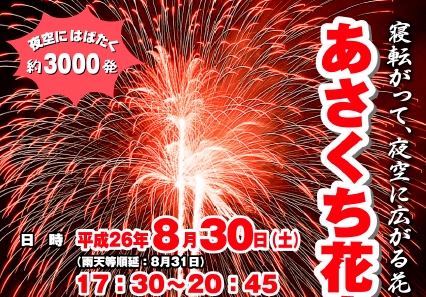
Last week there was a fireworks event in the south part of our town. The poster said there would be 3000 fireworks. We foreigners were skeptical but they delivered on their promise! There were so many fireworks! They went on for nearly an hour. In the finale there were so many explosions you could barely see the sky.
I have never been a big fan of fireworks. In Montreal every year there are fireworks twice a week for an international fireworks festival, but I never watch them. The fireworks at the festival here last week were very impressive, but what I liked most was that it was a very relaxed way for people to get together. It doesn’t require much preparation (although you can dress up in yukata if you like). It also doesn’t require much conversation since those explosions make it almost impossible to talk anyway. It’s a nice way for people to be together and appreciate the summer in the (relative) cool of night.
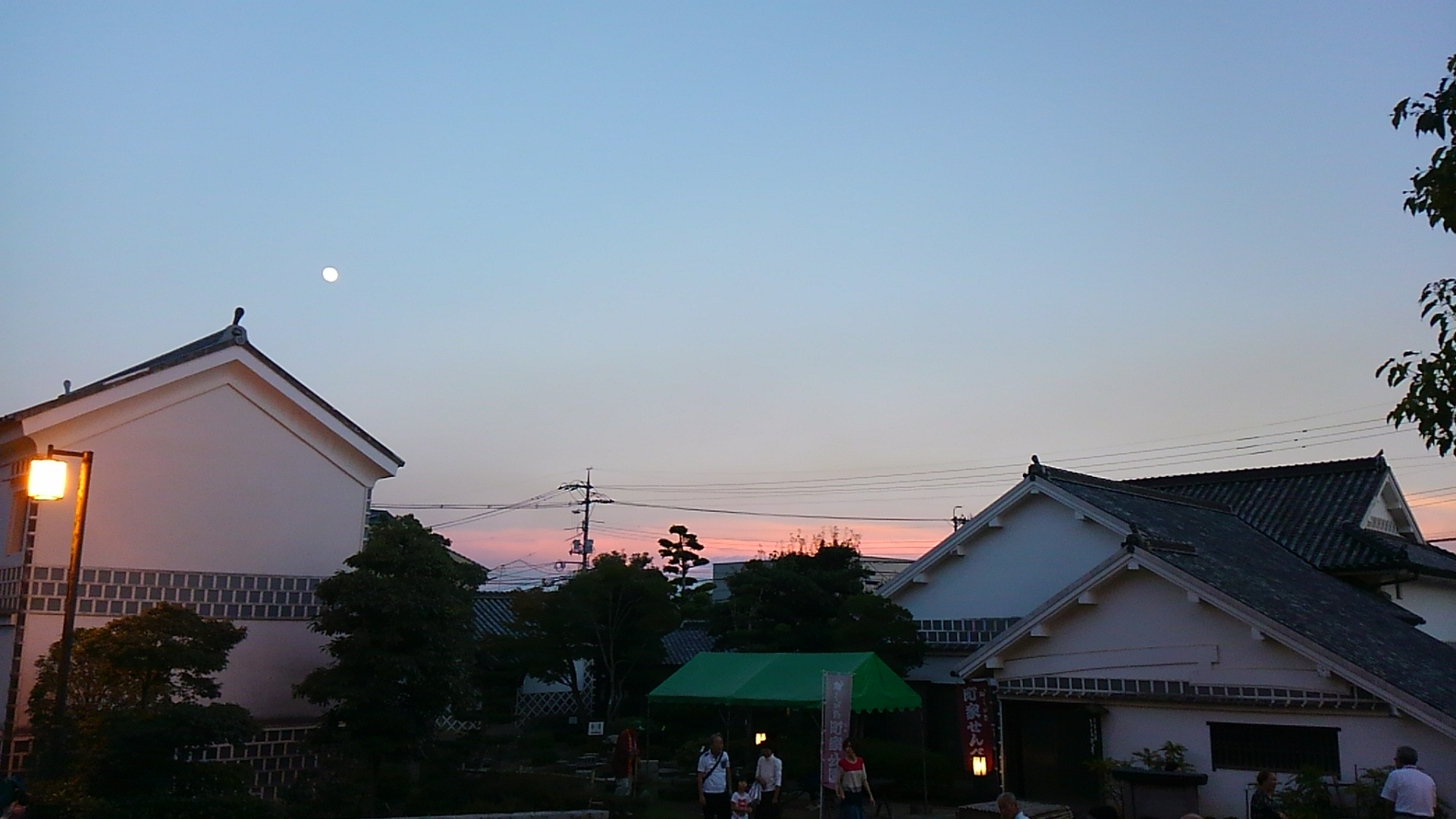
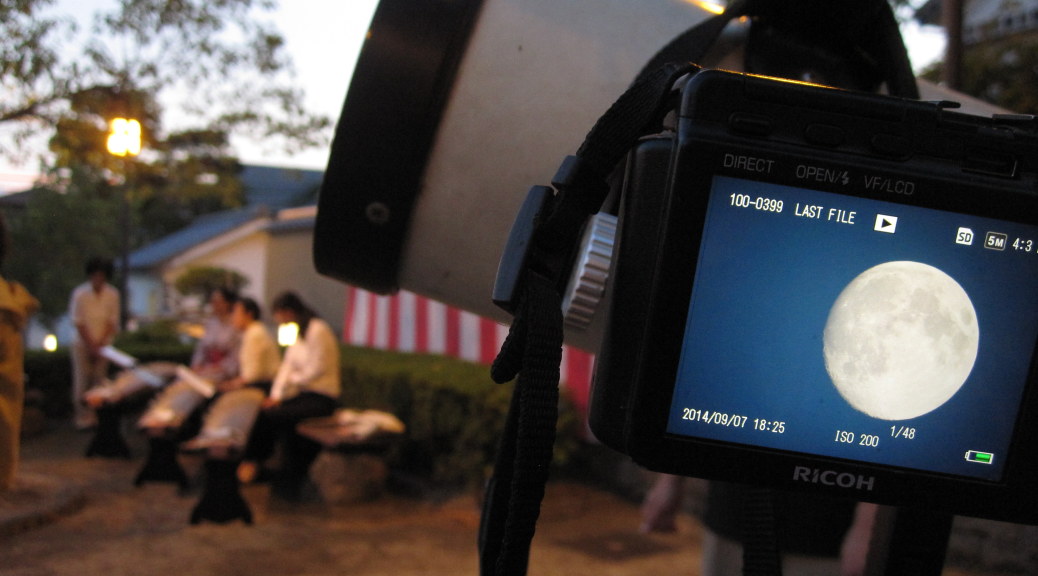
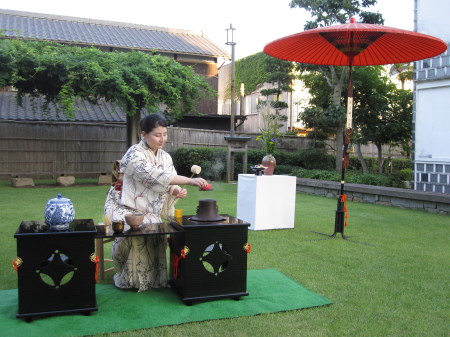
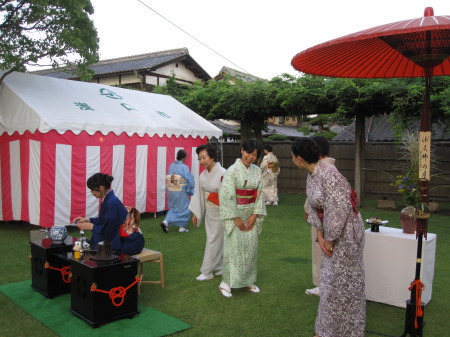
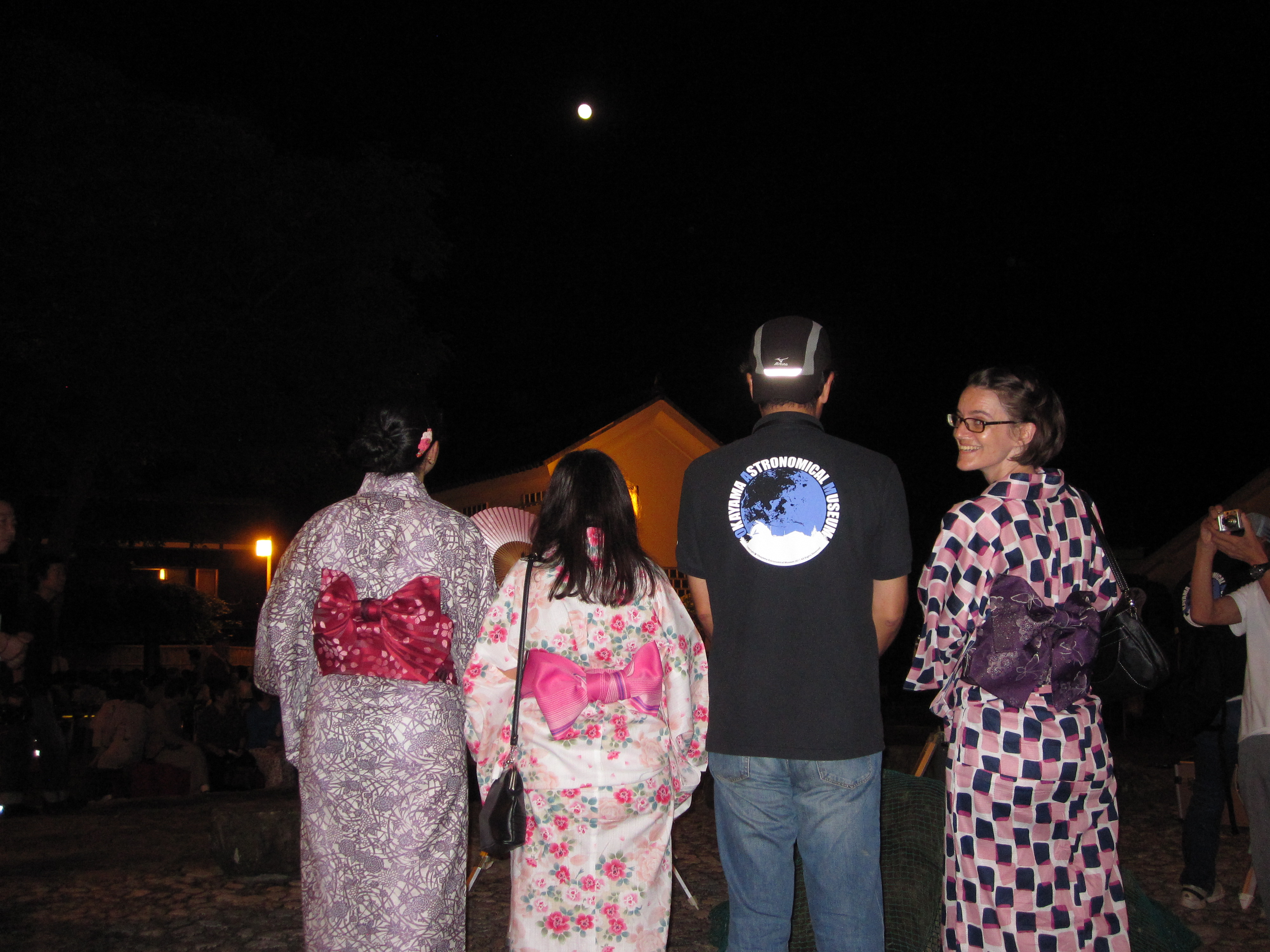
Yesterday was a moon viewing and tea ceremony at an historical teahouse in my town. The moon was not quite full, but it was a beautiful clear night. The ceremony was held outdoors in the garden. There were three women playing music on koto in the background. Also, there were a bunch of telescopes set up. It was very impressive to see the details of the moon! It is so white considering it is just a rock, but I suppose this is more a reflection of the brilliance of the sun (literally).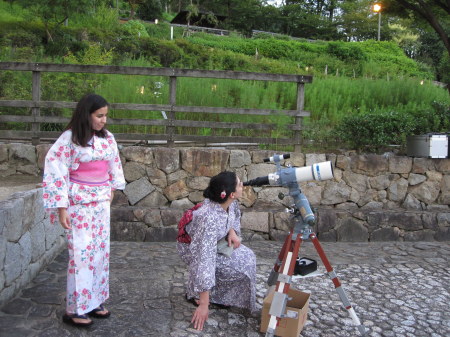
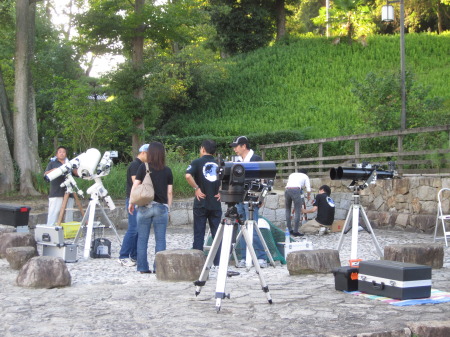
I`m not sure if having telescopes is standard practice for moon viewings in other places, since my town is also home to an astronomical observatory and many of the staff were present. In addition to the tea ceremony club, the astronomy people and the koto players, a photography club was also present. It seems that even in adulthood Japanese people are part of a club!
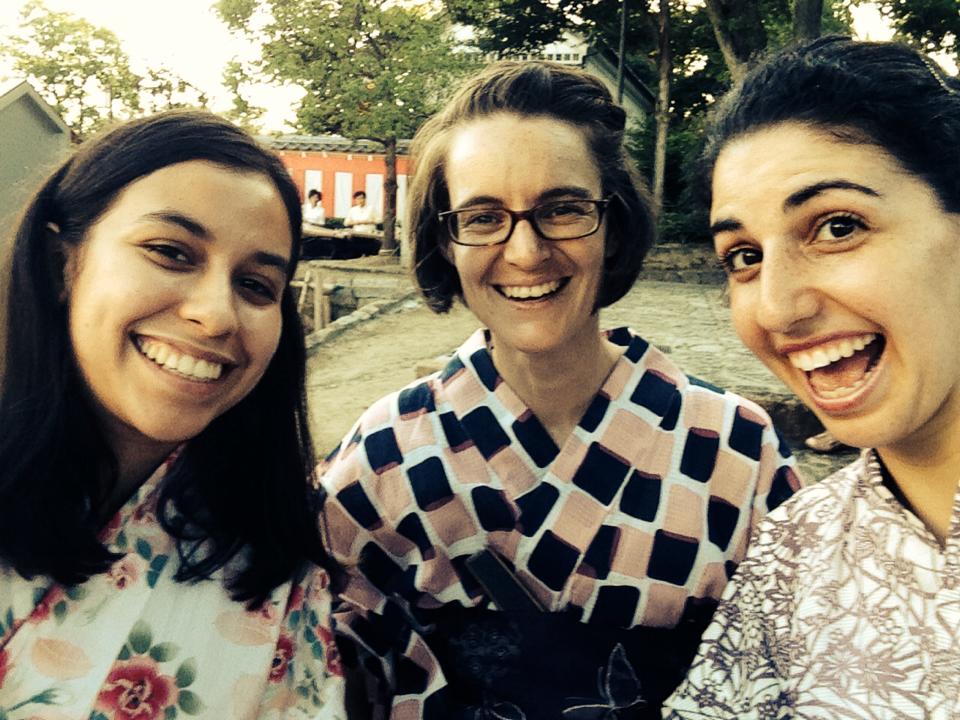
Three of us decided the moon viewing might be our last chance to wear yukata this summer. So we dressed up and hoped we would not be the only ones! In fact, we were the only ones in yukata, but luckily there were also many women involved with the tea ceremony who were wearing kimono. But people were always happy to see us dressed up, especially the older ladies.
One man asked for a photo with us. He asked if he could put it on facebook. We sort of laughed and said of course… then we found out he was the mayor of the town! This was the first time we had met him. He said he usually invites the ALTs to his place for takoyaki but he had failed to catch any octopus this year (!!!). Lucky octopus….
A few years ago, I saw an amazing full moon rise. We were in les Escoumins, near Tadoussac, looking over the fleuve Saint-Laurent. The moon is so large and red when it is close to the horizon! I had seen the red moon before but I hadn’t thought about what time it rises. Since the full moon is directly opposite the sun from the Earth, it will rise be around the same time as the sunset. After realizing that, I started trying to watch the moon rise from the lookout on Mont Royal. However, even on clear days there was usually so much haze on the horizon it was impossible to see the moon until it was most of the way into the sky. So I gave up on moonrise chasing.
In Japan, the moon viewing is usually in September. Aside from all the obvious traditional things like the kimono and tea ceremony, there is something very specific to Japan about this event. It feels like such a nice way to appreciate your surroundings and friends without being too attached to what is happening here on Earth. It is also very difficult to photograph the moon (unless you have a telescope attached!), so you need to enjoy the moment and not worry about capturing it. I feel a little sad to think that even if I were to organize a moon viewing event when I return to Canada, it wouldn’t really be the same. Or do people all over the world react in a similar way to viewing the moon?
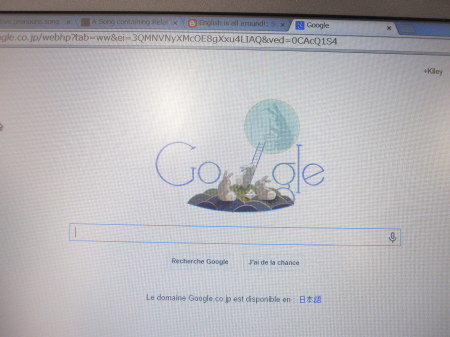
Have you not seen the bunny on the moon, I have!
At times, He hangs nearly upside down.
Yes, I have seen the bunny on the moon — I guess what I meant was I was surprised no one mentioned it at the viewing! I actually know most of the japanese words to talk about this so it was really a missed opportunity.
Today at school a teacher asked me if I knew about the rabbit on the moon, and what we had in Canada. When I told her we saw a man on the moon she was horrified :) I showed her an artists rendition as well. I agree that rabbits are much better. :)
Excuse my ignorance, but what is the difference between yukata and kimono?
I’m sure there is more to it than this, but basically a yukata is made of cotton and worn in summer only. A kimono is made of silk and worn all year… it also tends to have more layers and accessories :)