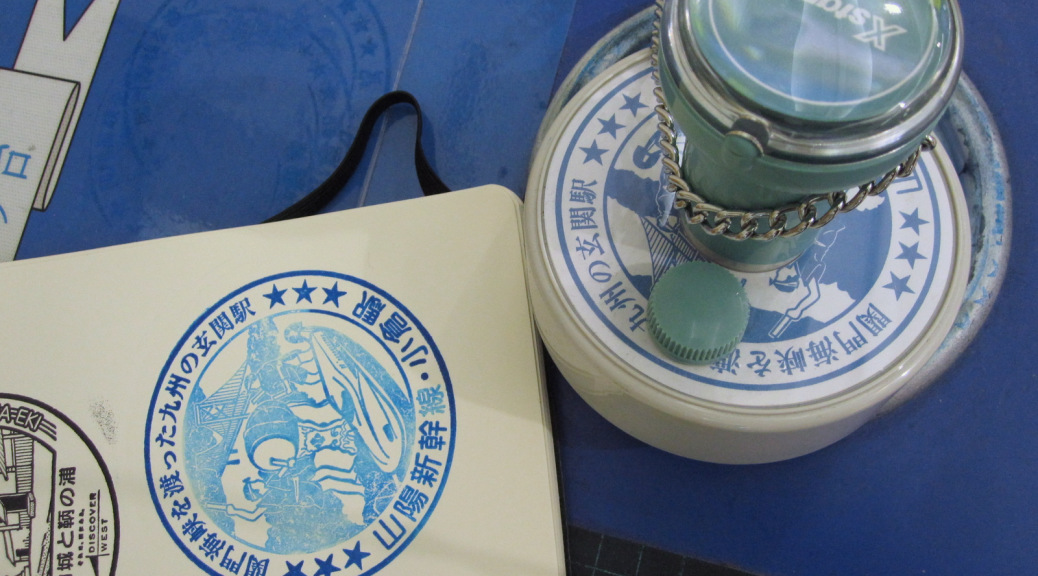
It was pointed out to me that I have not posted about stamps. I am not talking about postage stamps (kitte in Japanese), but ink stamps (generally just called stanpu スタンプ). I warn you, this post may seem very nerdy, but I hope it will help explain why I love stamps so much.
I discovered stamps by accident last year, on the first day of our vacation. We were at Osaka Castle and there was clearly some kind of school trip there at the same time. The kids were flocking around a small table.
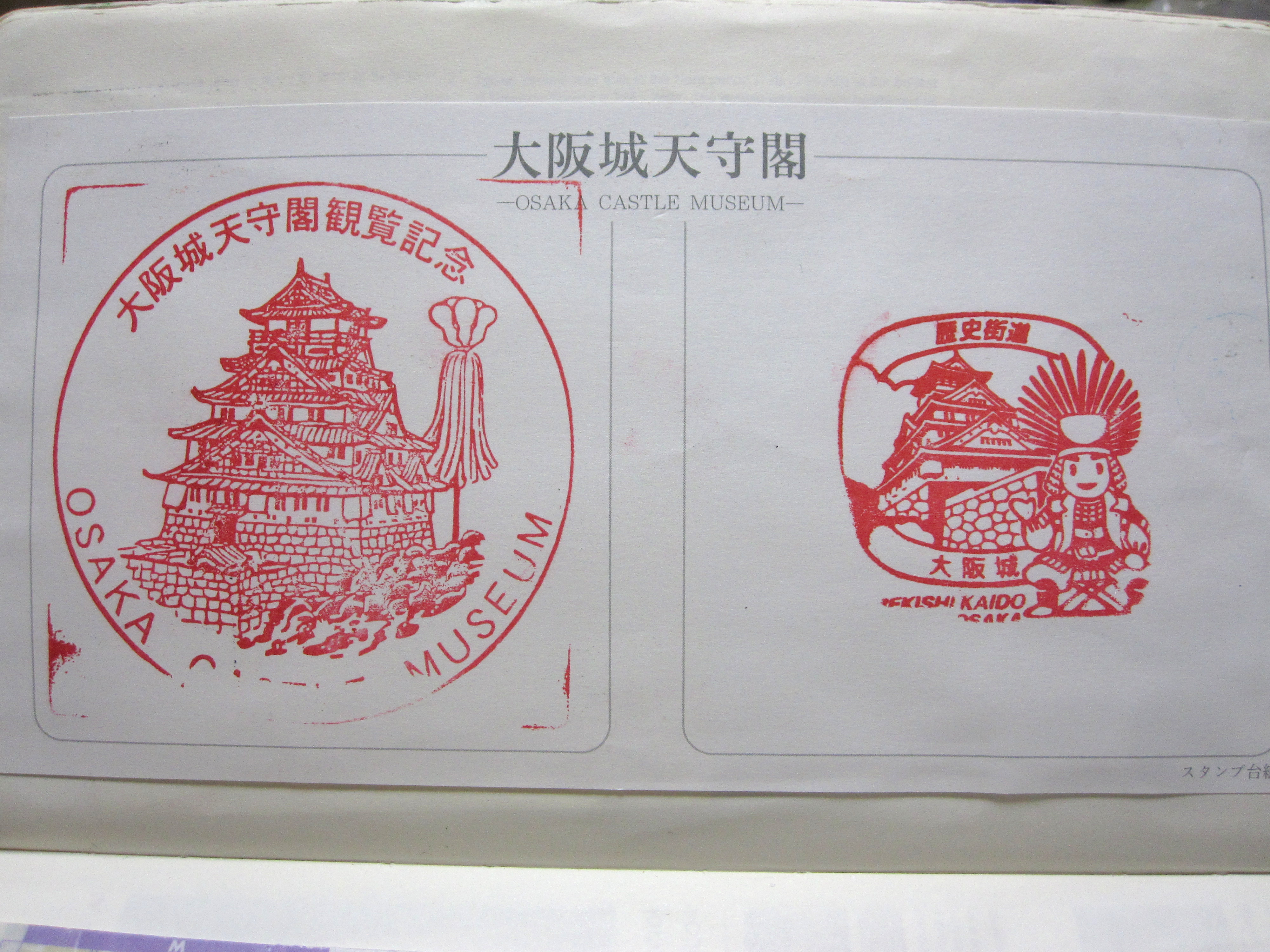
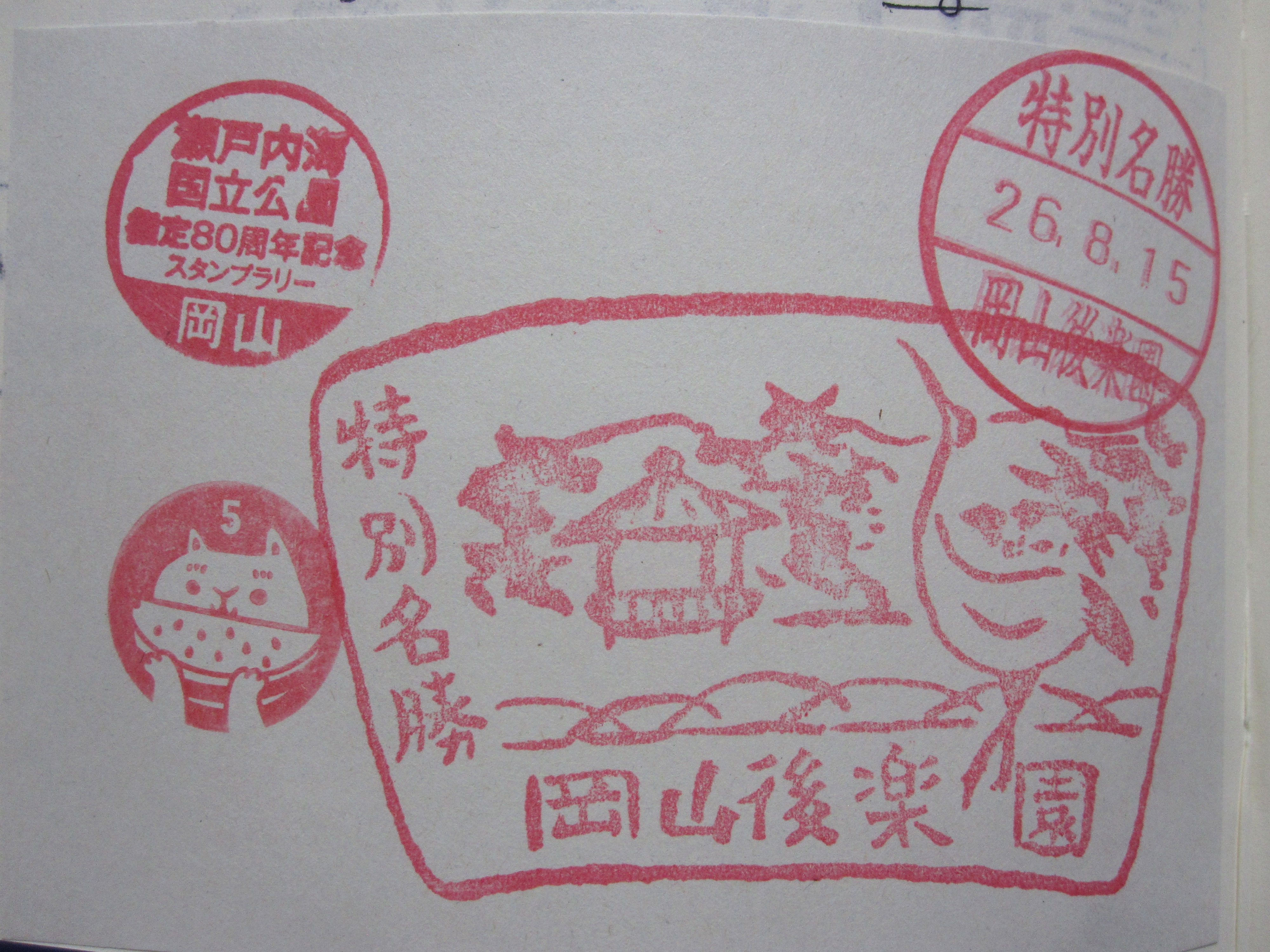
I was completely charmed. They were so beautiful. The quality was unlike any stamp I had seen before. I don’t know if I could have even imagined one with this level of detail before. And of course it was so striking with the fiery red ink.
I learned that this was not an isolated stamp occurrence. Stamps were a big deal in Japan. They could be found not only at tourist attractions like castles, but also at most train stations. Stamps became an important part of our three week vacation, and my scrapbook filled with stamps is perhaps my favourite souvenir.
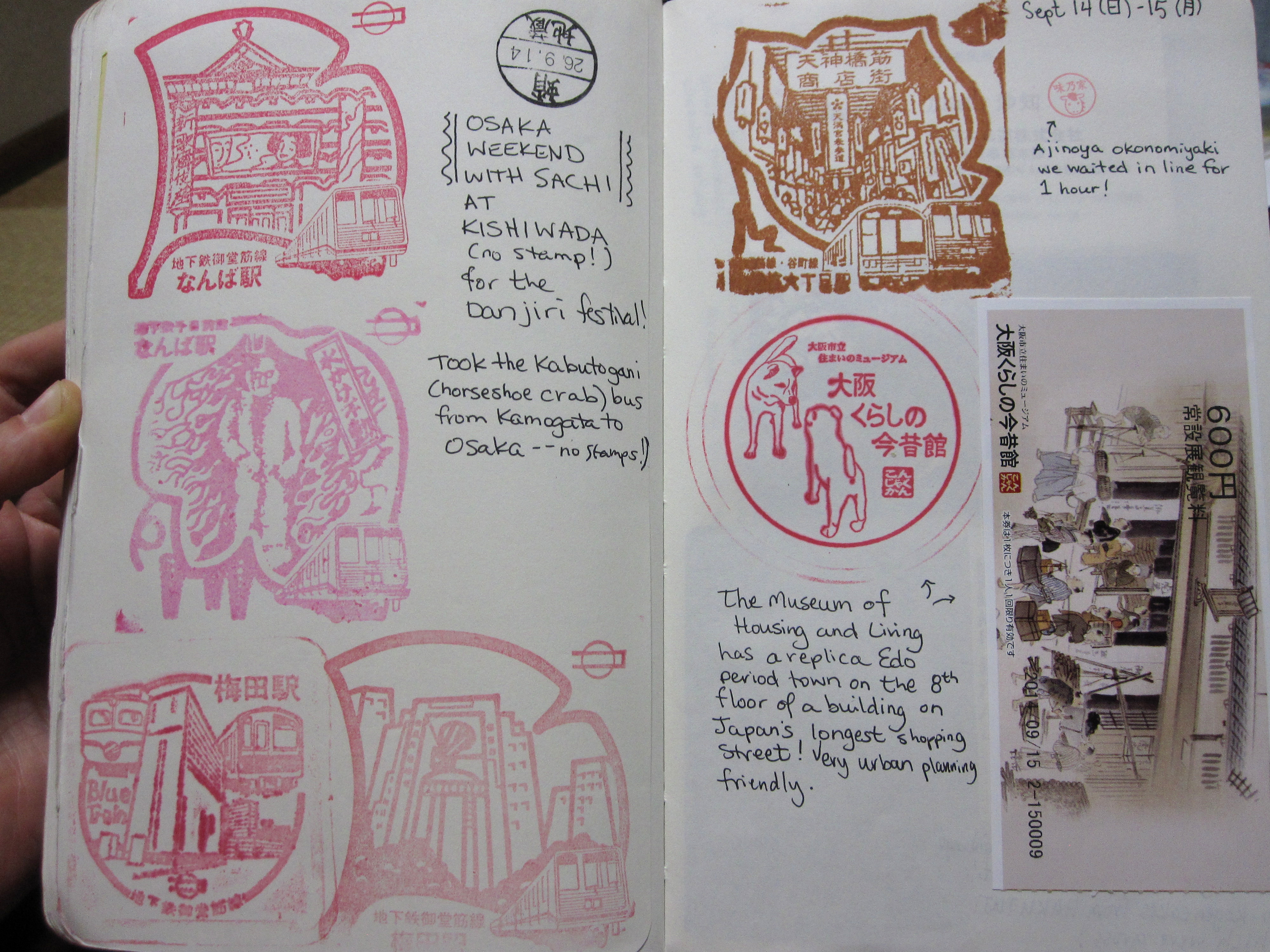
One aspect of stamps appealed to my interest in geography and place. To get a stamp you have to physically be in the place. You must personally press the stamp to the ink pad and to the paper. There is a feeling of satisfaction from a good impression, and that great disappointment when a piece is missed or there is a double impression. After you leave, there is a sense that the stamp is proof that you were really there.
Aside: As a working adult in Japan, the feeling that a stamp is “proof” has new meaning for me. That’s because in Japan everyone has a tiny stamp that they use as their signature. In red ink (always red ink). It is called an inkan or hanko. Every day I put my inkan on the date on my attendance calendar. It’s like Japan was made for me (and my love of stamps).
For the most elegant stamps, you must go to temples. Here the temple workers write with beautiful calligraphy over the stamps, sometimes on beautiful paper. I feel a little ashamed to put them in my messy scrapbook. You can actually get really beautiful books specifically for temple stamps, but I’m not sure I have the dedication to travel to many temples.
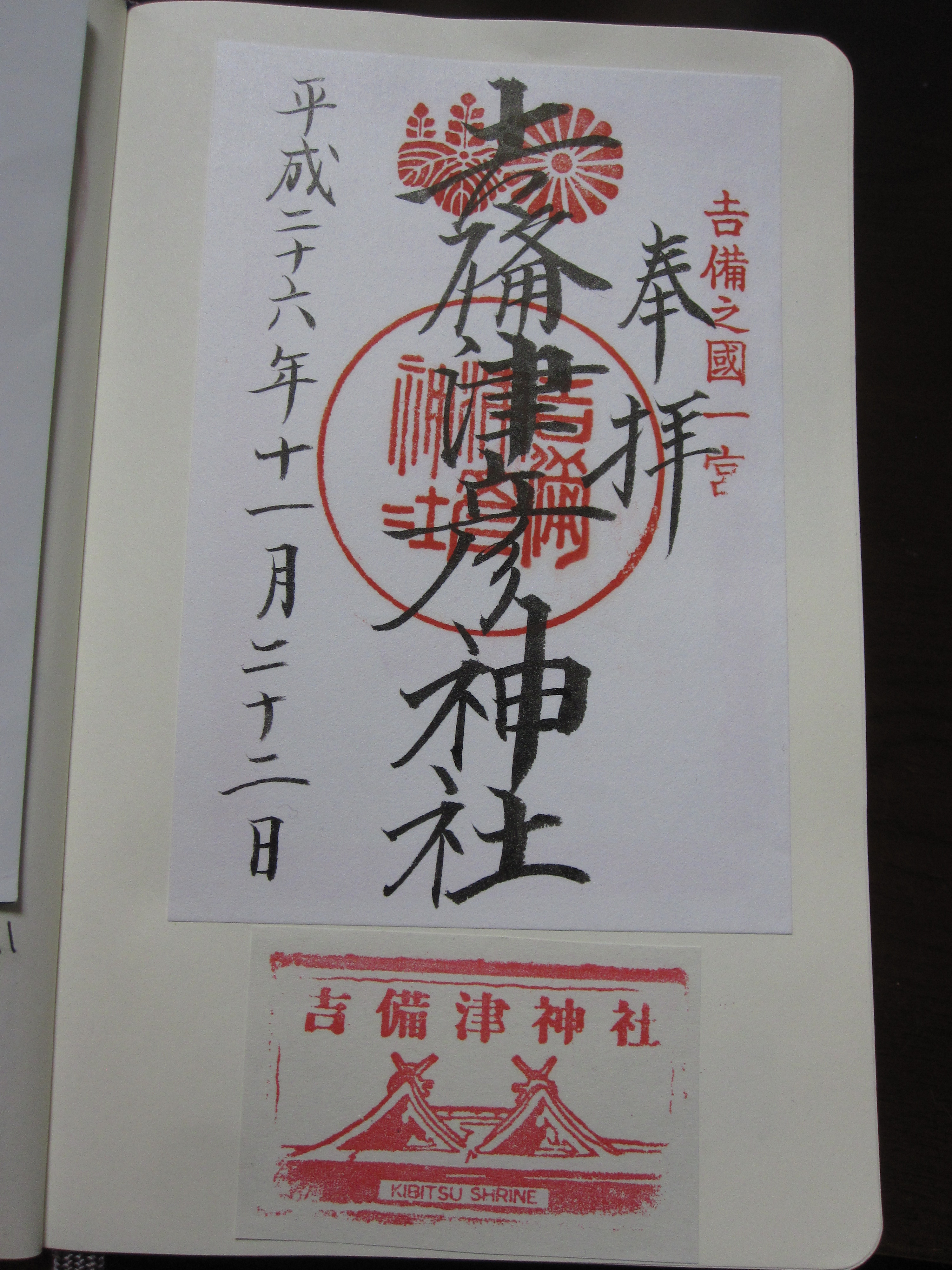
Usually there is a small fee for the temple stamps. Maybe because of my dedication to stamps, I don’t mind. With most stamps you pay for something at some point. At tourist attractions the stamp is usually after they take your tickets. Station stamps generally mean you have paid for a ticket or you will probably do so soon. So stamps aren’t exactly “free”, but they are more like a perk for your patronage. In the case of temple stamps, I like to contribute to the temple economy (which seems like it doesn’t really need my help, but I still enjoy the temples and would like them to remain strong).
In addition to tourist stamps, station stamps and temple stamps there are also stamp rallies. These are sets of stamps that are spread out in a particular area, usually shops. People are encouraged to collect them on a sheet that they can send in for a chance to win a prize. The first stamp rally that I saw was by the tourism board for the entire western half of my prefecture. It was promoting small shops and attractions. There were almost 40 locations, each with a numbered stamp, but you only needed 9 on your sheet to enter to win. In this case, stamps really are free : you would think you need to make a purchase to get a stamp, but it is usually just sitting out on a counter somewhere for anyone to use.
While visiting a nearby castle, I found a stamp rally that was promoting an art walk. My desire for stamps motivated me to check out the spots on the rally, and I saw some cool art that I wouldn’t have seen otherwise. While following that rally, I also discovered another stamp rally, through which I discovered many free exhibits at art and culture museums. And I was not the only one.
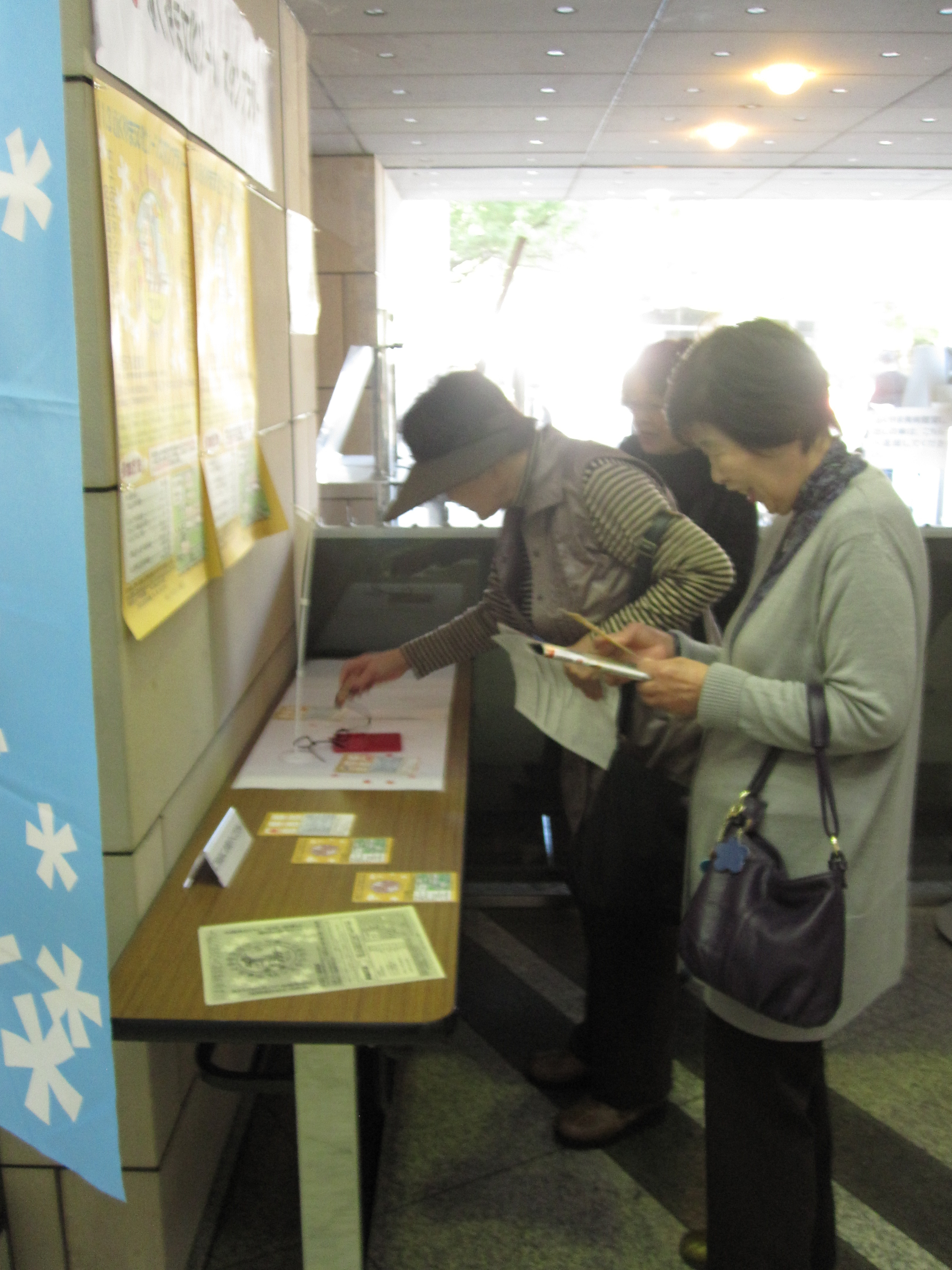
I am convinced that stamp rallies are effective for getting people to visit places they otherwise may not discover. But sometimes this can backfire.
Let me explain with this example of the coolest stamp rally I’ve seen yet. It was on a street in Kurashiki’s historical Bikan area. Almost every shop on this street had a stamp that was handcarved to look like the actual shop. There was a variety of brightly coloured ink, and the rally paper was arranged to look like a linear map of the street.
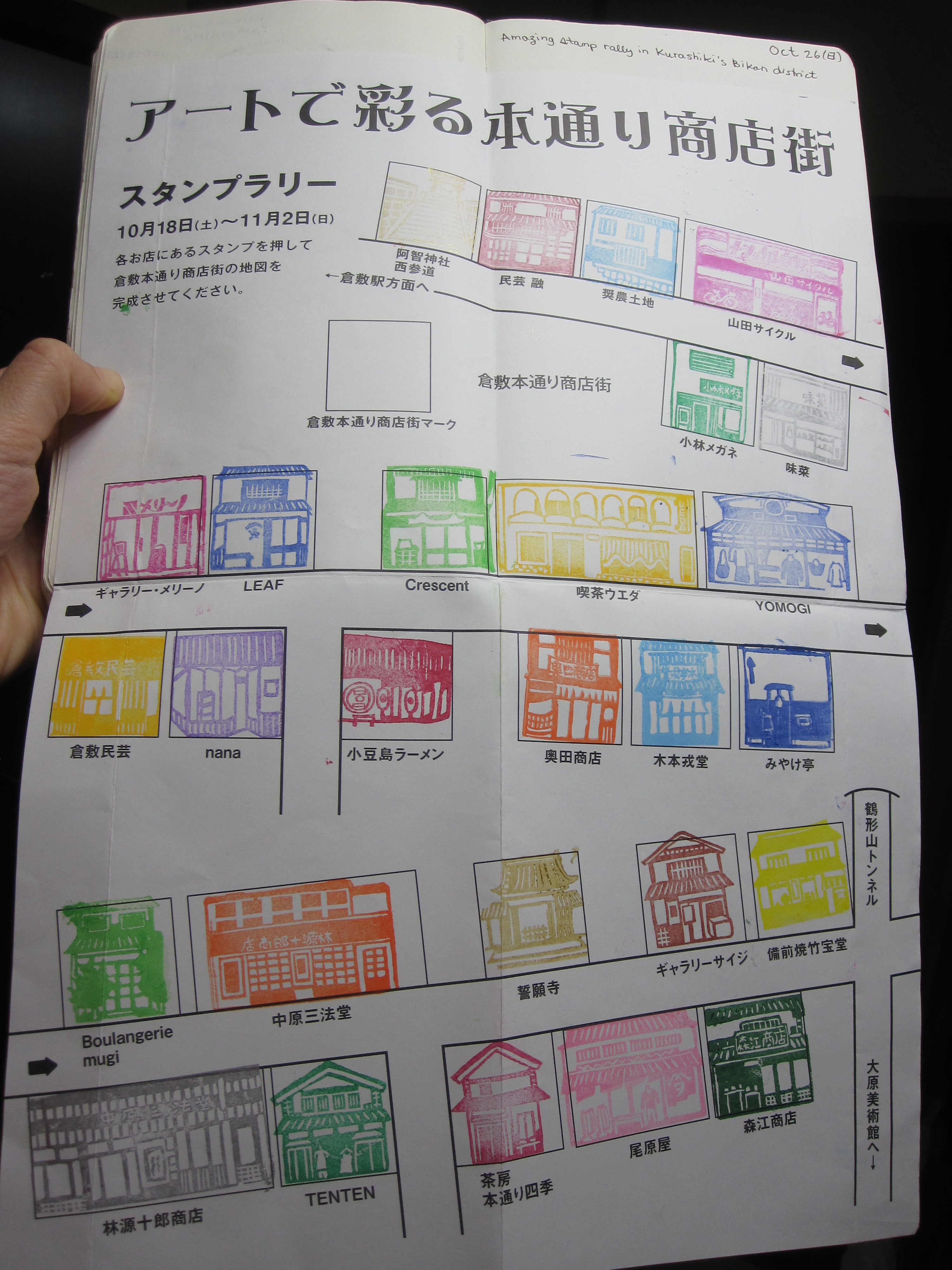
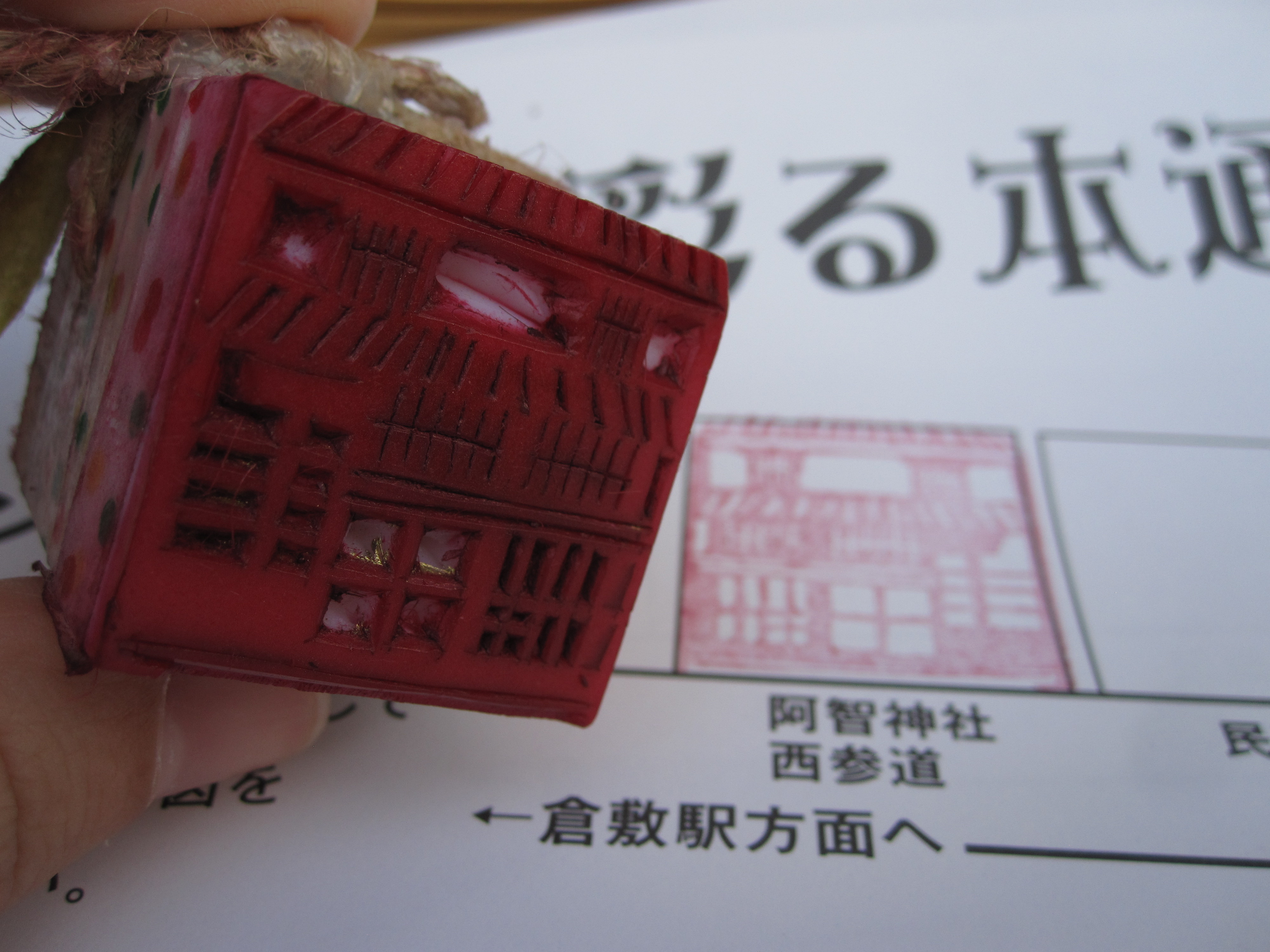
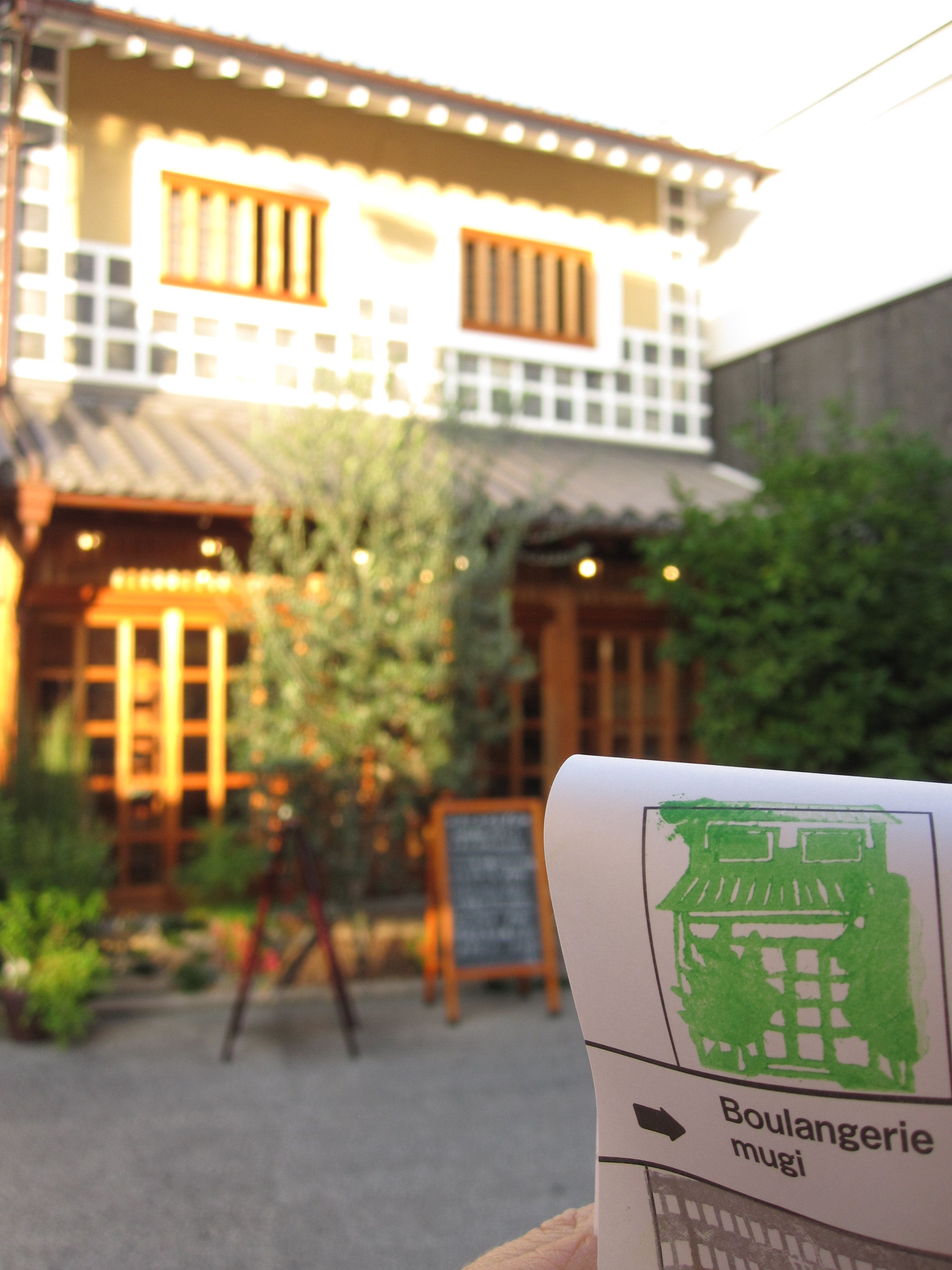
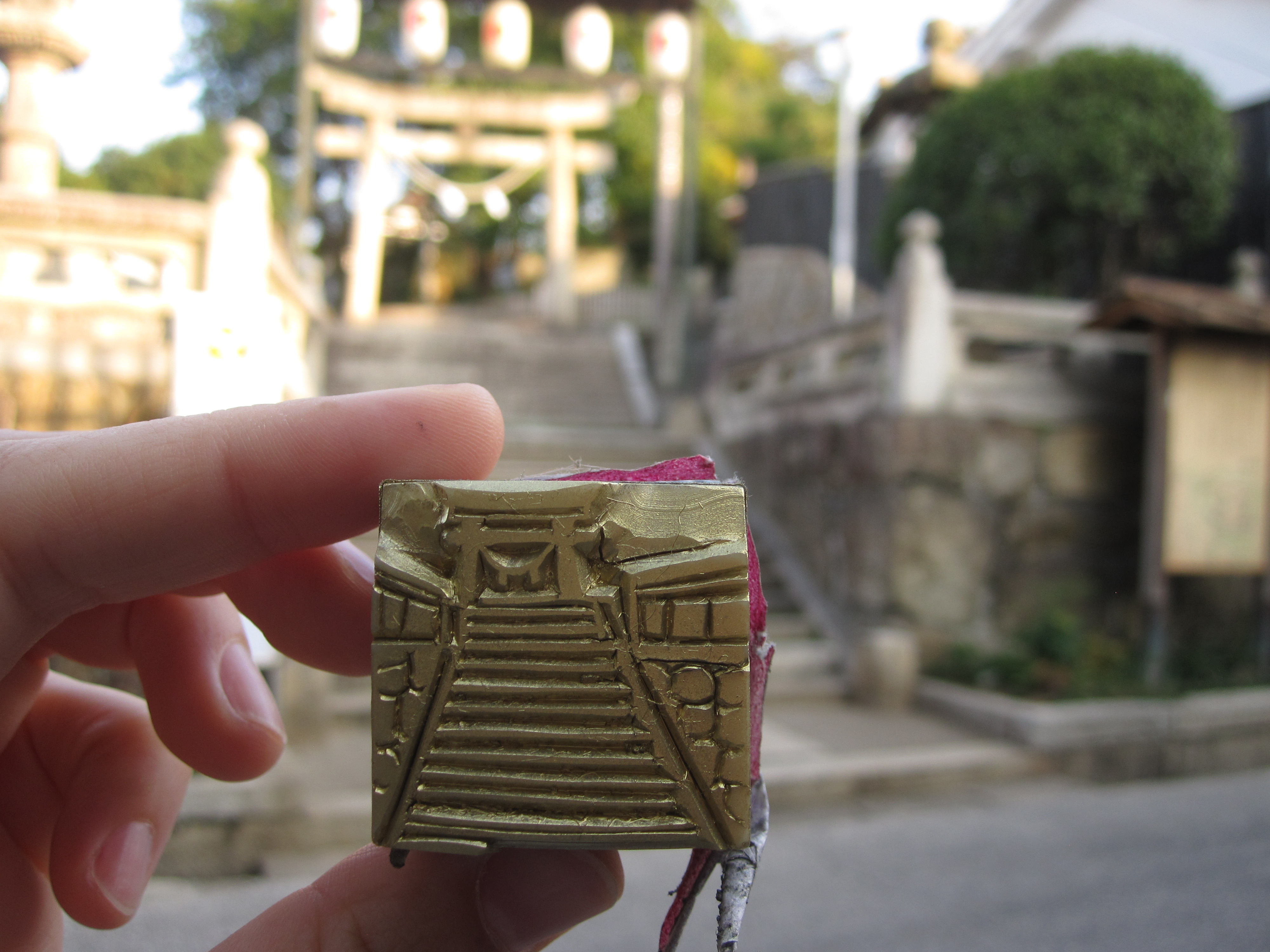
Why do I use this very cool stamp rally as an example of a stamp rally that backfired? First, let’s remember the purpose of a stamp rally. It is to get people to discover places (esp businesses) they wouldn’t have otherwise seen. This rally had 27 stamps in only 4 blocks. I found myself hopping from stamp to stamp without looking around at the shops themselves. It’s true that I am now aware there is a bike shop on this street (thanks to the bikes in the stamp), but I still don’t know what many of the shops are (I admit not being able to read kanji may be a big part of this).
So I feel it is important that the stamps be far enough apart that the person collecting them has to invest a little bit of energy to get there — not too much, just enough that they want to enjoy the destination for a bit before moving on to the next stamp. This is how I felt with the two art-walk rallies.
What do you think? Could stamps or stamp rallies could be introduced in Canada? Or does it require a stamp-collecting culture?
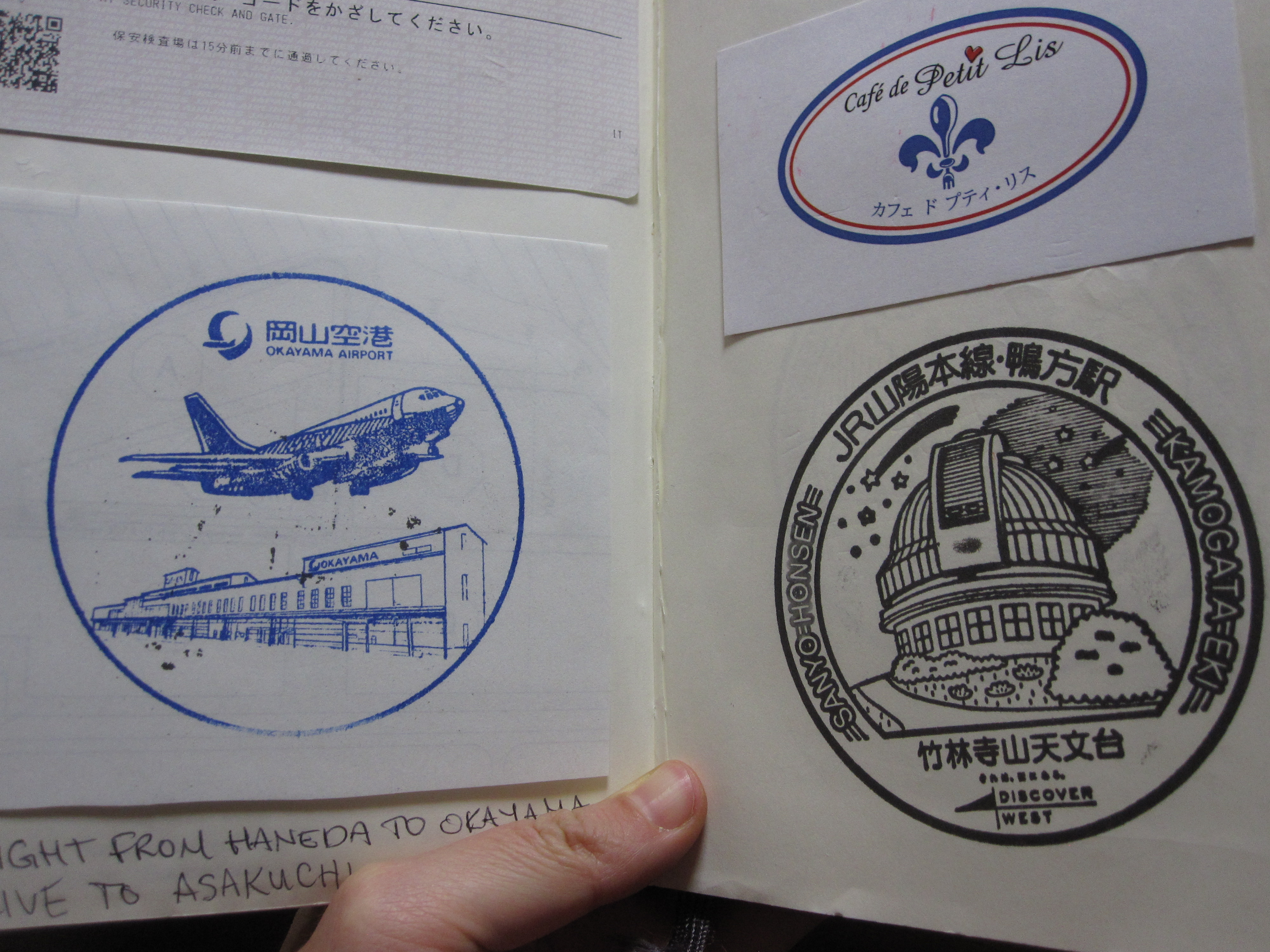
What a brilliant explanation of stanpu–I think this is my favorite post of yours so far! Love the pics as well ; )
Glad you liked it Amy. I hope you liked some of the new stamps I got since you last saw my book.
This is quite an excellent gathering of knowledge and photographs. Mind if I re-post this to my Facebook Timeline as well?
I’m glad you found it informative — of course feel free to repost.
I love this and I would definitely check out a stamp rally. I don’t know if that is the thing that would get a lot of people here, but maybe it is. When you come back, you should get a few going and see how they work out!