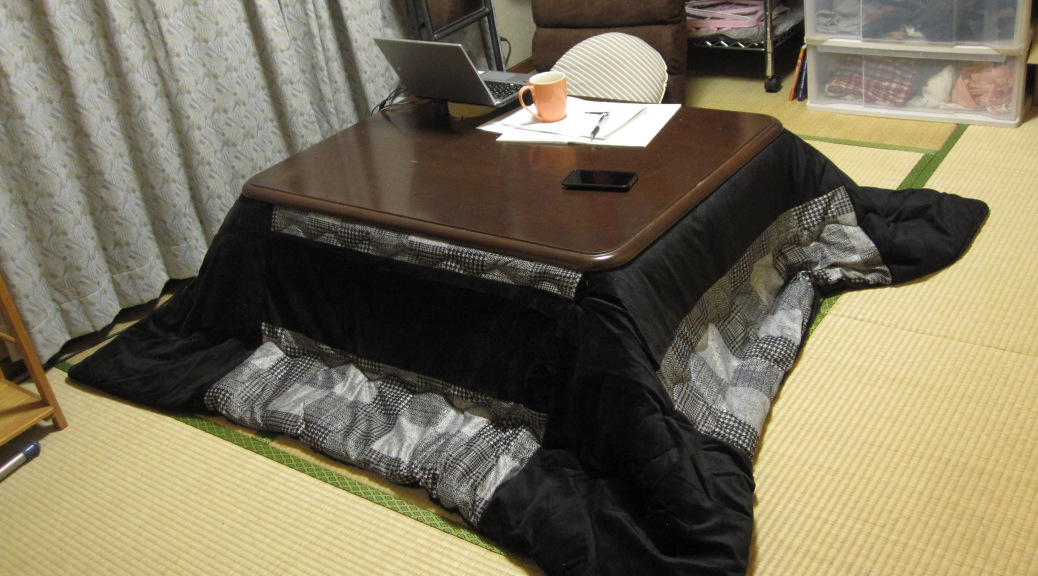
By request, this is a post about kotatsu. While learning the “that/which” conjunction, my students taught me about many Japanese things. The example in their textbook (New Crown 3) describes a kotatsu:

There was a kotatsu table at my apartment when I moved in. It just looks like a coffee table, but the top is detachable (so you can get the cover under it in the winter). The lesson was perfectly timed. The weather was getting colder, so I decided to get a cover. This is my kotatsu:
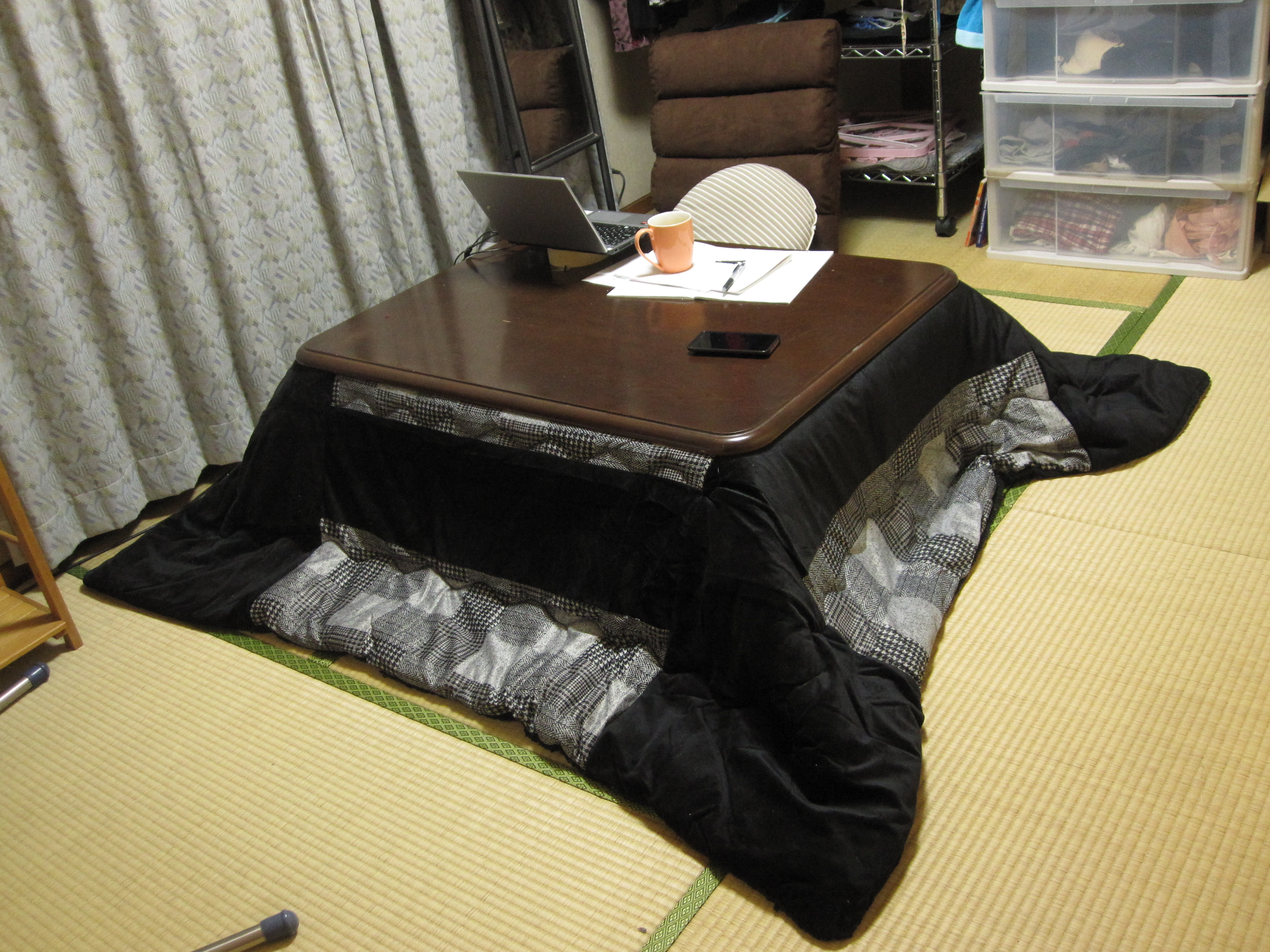
One detail that is glossed over in the textbook is how the kotatsu keeps his family warm. There is a heater inside the table.
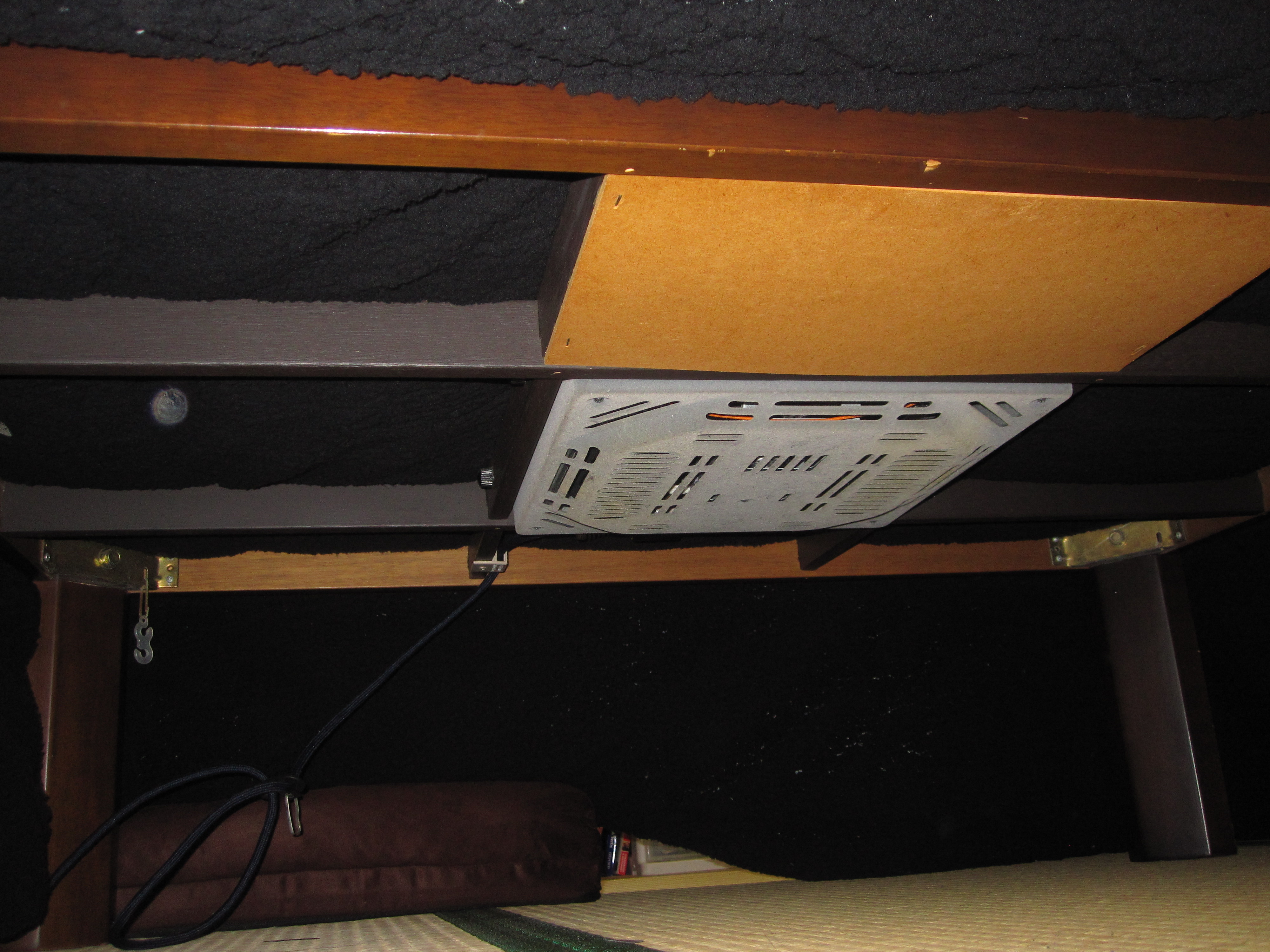
The kotatsu is an example of an approach to heating that is very different in Japan than in Canada. In Canada, it’s kind of assumed that every room will be heated. I suppose it is important to keep pipes from freezing and causing damage. We also take the insulation of our buildings much more seriously.
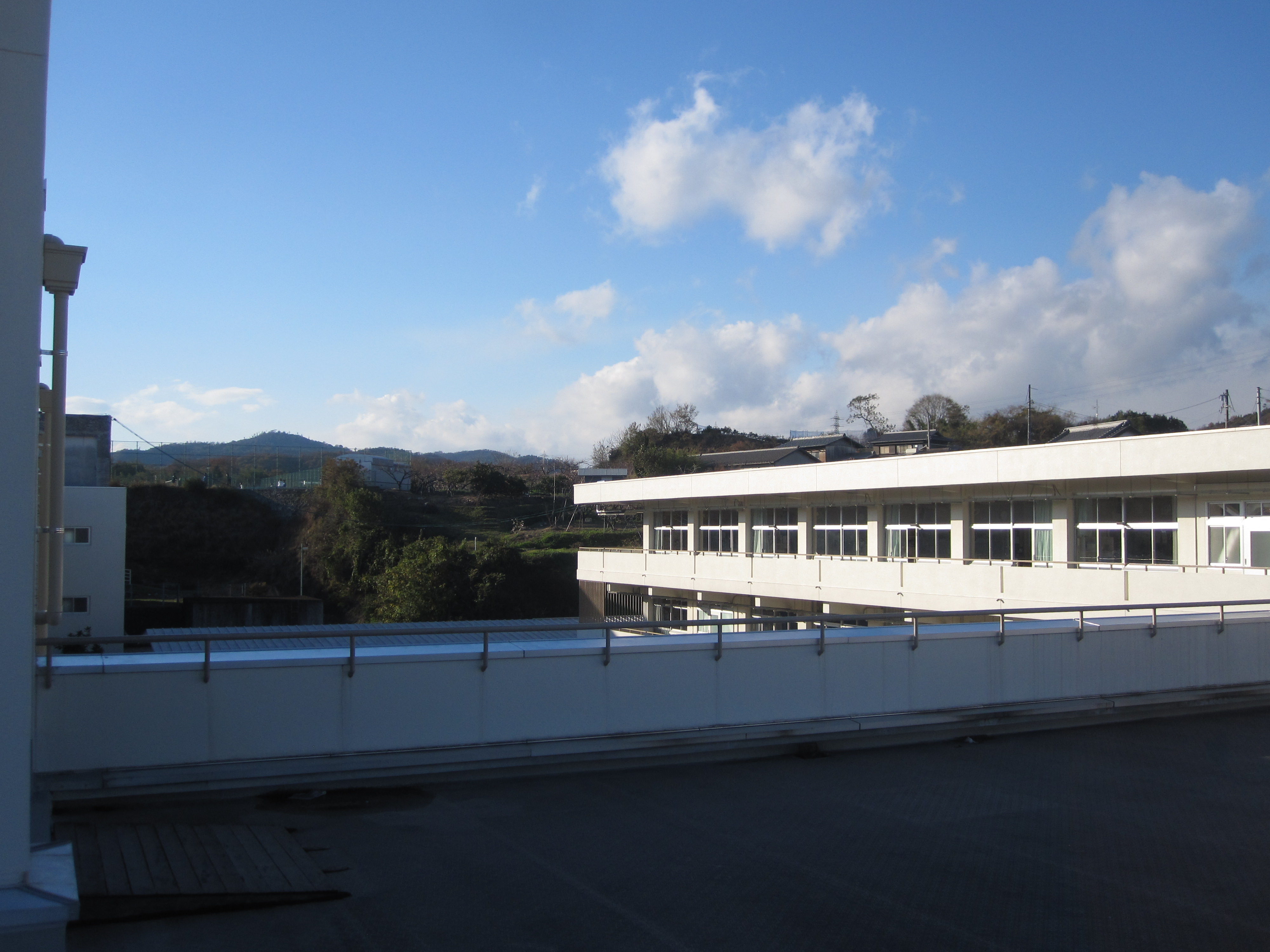
In Japan… I can only speak from my experience. In my kindergarten there are kerosene space heaters that are placed in the middle of the rooms. At my main school each classroom has an air conditioner that doubles as a heater, but there is a rule that they are not to be turned on until January (although the staff room heater has been on… I will not question it!). The front doors to my school are open wide all day. The classroom walls are primarily made up of single pane windows (which I understand to be the poorest of insulators) and doors that open to outdoor hallways. If you’ve watched any anime that take place in a high school, you probably know what I’m talking about…. but for everyone else:
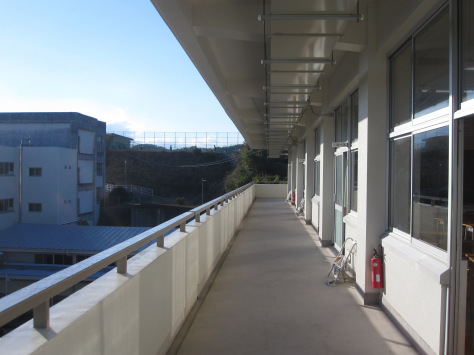
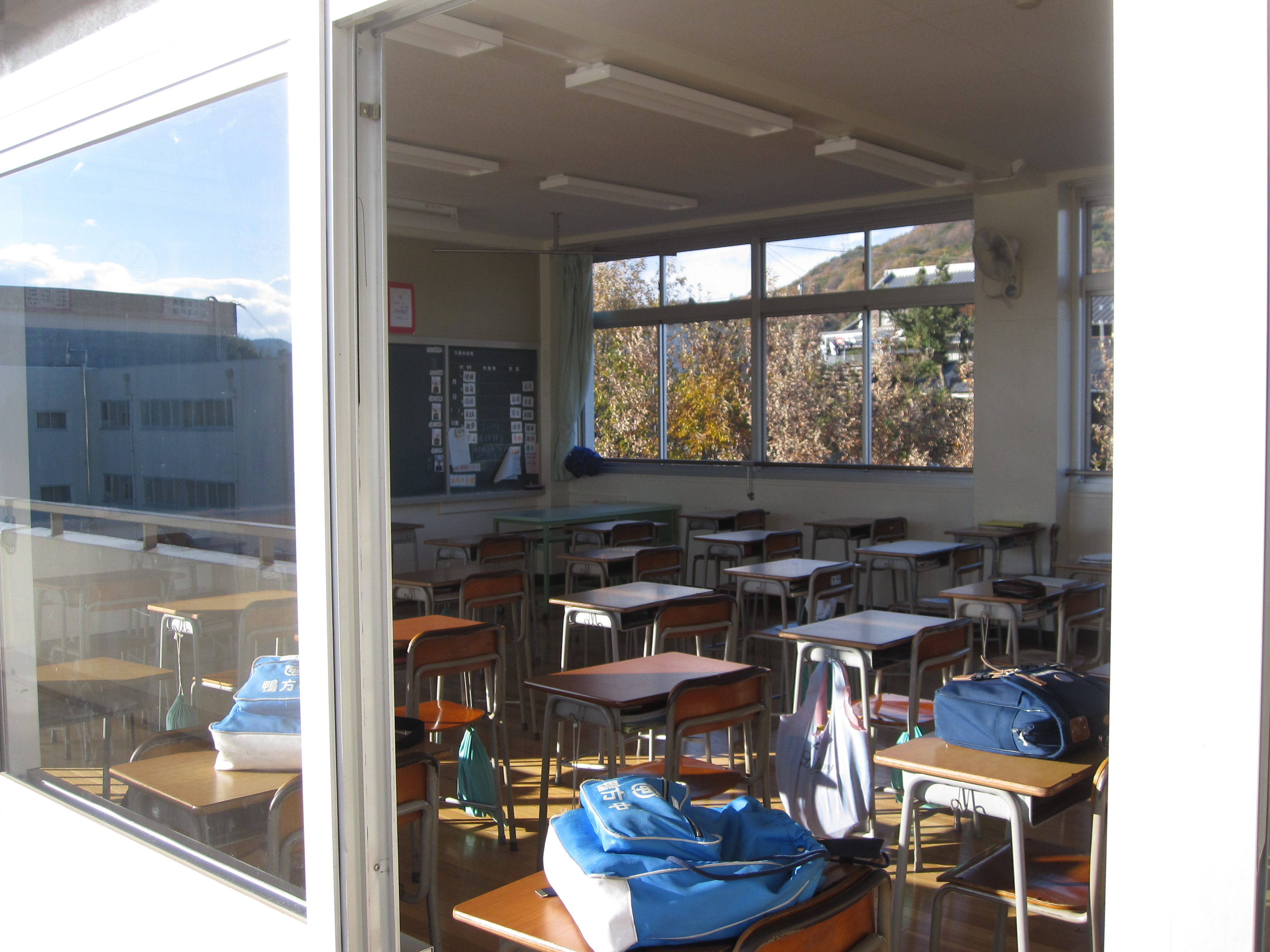
As for homes, I am mostly familiar with those of other English teachers. Usually there is only one room with a heater (usually it is not the bedroom or the kitchen) which is only heated during the time it is being used. But some of my teachers have told me they have the kerosene heaters for the middle of the rooms in every room in their house, so perhaps every room could be heated if you were willing to invest in the right equipment. Still, this heating would be limited to the time the room was actually being used.
The kotatsu is part of this “just heat the small area where you are” approach. If you are eating, reading, using the computer, you receive localized heating. Why should the room you are in be hotter than 16°C if your toes are warm? Why should other rooms be using energy to be heated if they are not being used?
This is also good for the warm clothing industry. Layering has taken on a new meaning for me. Right now stores are filled with so many house-coat-like products, pillows designed to cover every part of your body, and turtleneck shirts… turtlenecks everywhere.
When I think about environmental issues and trying to reduce our energy consumption, I wonder what we can learn from the kotatsu. The kotatsu would only be useful if accompanied by a lifestyle/behavioral change, but these are the type of changes we need to face the challenges ahead.
Can you sleep under the table? :-)
According to my teacher, the problem with kotatsu is “it makes you sleepy” (using the grammar point “~ makes you ~”). So people do sometimes sleep under the kotatsu, but usually by accident. I wonder how many fires kotatsu have caused…..
Your heating and cooling experience is Japan-wide. Kerosene heaters and A/C plus heater units abound even in Tokyo. Our A/C heater unit was up near the ceiling so the hot air would come out up near the ceiling and never blow down lower than a few feet all winter. How well I remember kerosene heaters blasting heat on my front with an open window or single paned glass blasting cold on my back and the truly warm air circulating above my head….hahaha. NOT like Canada!
Those kerosene heaters smell so bad!!! And they get so hot. I wanted to also comment that it is in this season that I am starting to truly appreciate the heated toilet seats —- in August it seemed rather ridiculous but now I am thankful!!!
I keep thinking of things I want to add to this post. I feel that this constant state of coldness helps to explain the Japanese obsession with hot baths. Being located over a magma hotspot and having widespread access to hotsprings probably helps, too. However, first you have to convince yourself that taking off your clothes will eventually make you warmer (I am very bad at convincing myself of this!)
A – the outdoor hallways is quite common in Ghana, not only in schools, but also in pretty much any other building, including homes
B – I fully support the idea of heating locally, rather than the whole house. If the paradigm shift happened in Canada, we could merely heat around pipes and wherever people are, nothing else. I would love that, as heating makes me sick …and anyways, what is with people wearing tank tops and shorts when it is 40 below?